

FOOD FOR THOUGHT
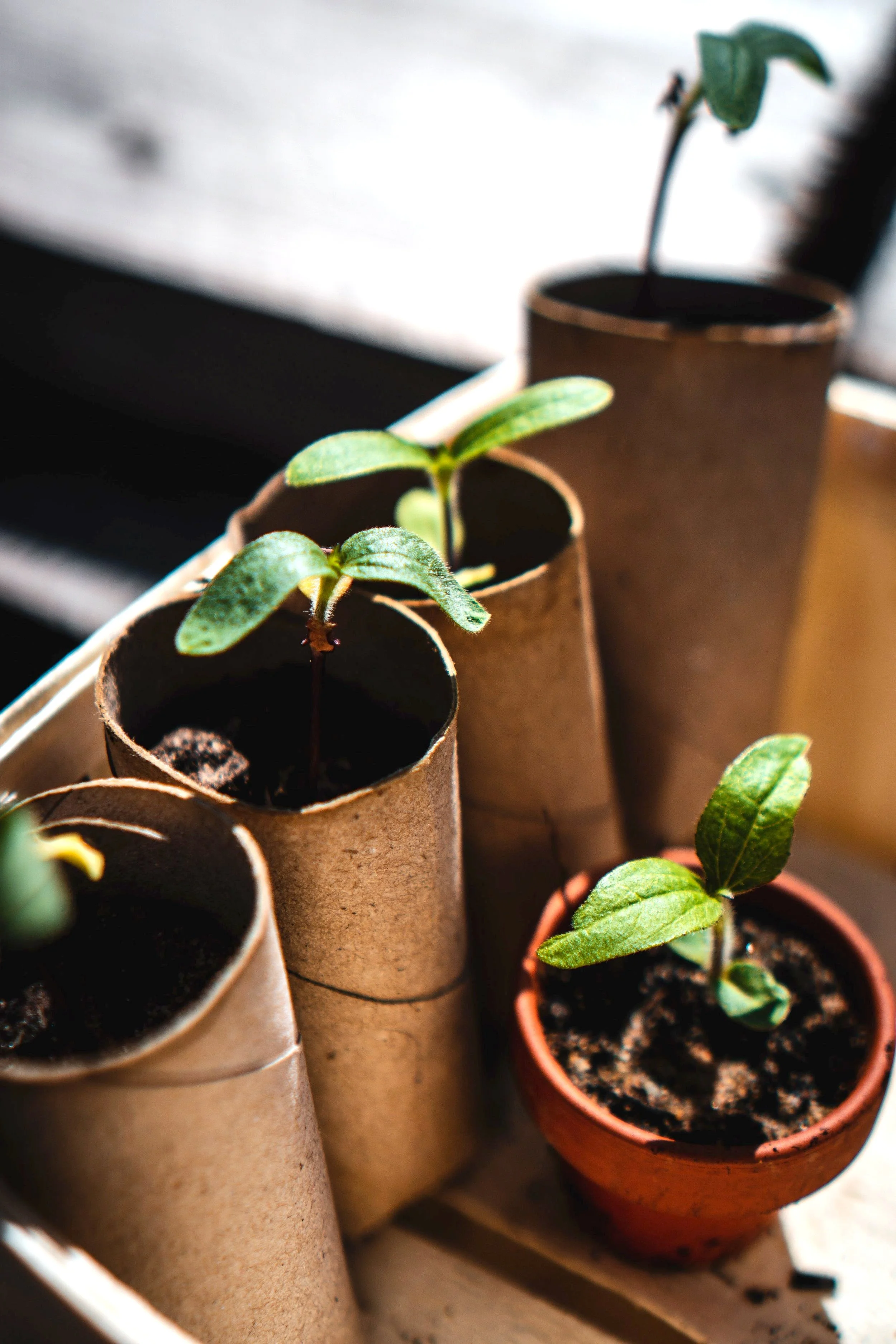
7th Principle - Implementing solutions on a small scale with patience
OR focusing on quality rather than quantity
💡 EXPLAINING THE PERMACULTURE PRINCIPLE
Nature calls on us to value small-scale actions.
"In nature, the design of a cell shows us that cells function best when they are at their smallest possible usable size (...). Excessive cell growth is generally impossible, but sometimes cells divide uncontrollably; this is often a sign (...) of cancer."
- D. Holmgren, *Permaculture*
This permaculture principle stands in contrast to the pursuit of growth at all costs and the commonly available standard solutions, which are increasingly valued by our Western society.
As for the need to take one's time, my teacher in collective intelligence reminds us
"There's no point in pulling on carrots to make them grow faster."
- Everything goes round and round on this earth; we are the only ones who don't realize it.
🔍 ILLUSTRATING THE PERMACULTURE PRINCIPLE AS APPLIED TO A MISSION OF TRANSFORMATION
Those who know me know that patience is a challenge for me. This is especially difficult when I have a lot of ideas swirling around in my head and the weight of the social and climate crises on my conscience.
When I started working on sustainability issues at my company, I was on my own and had to manage operations involving more than 15,000 employees and over 200 operational sites.
I was under pressure to ensure that these issues were truly integrated into the core of the business. I wanted to take action at every level, with everyone, right away.
My CEO said this very simple sentence to me when he hired me: "We have to change, and I value quality over quantity."
Simple, yet not obvious. How can we avoid falling into the trap of superficial changes? How can we achieve both quality and impact?
The focus then shifted to the key needs of the people on the ground—the “why” behind each action. The priority was to work with willing and committed partners.
In doing so, I was fortunate to test and adapt each solution to address social, environmental, and local challenges, with the cooperation of operational experts at all levels. The success of an initiative—despite its challenges—encouraged others to try developing practical and sustainable initiatives on their own, which contribute to a better world.
So yes, it was difficult to decide what to focus on, to find the right partner for the right pilot, and to allay impatience and the fear of making mistakes. But it was worth it.
Together, we developed hundreds of sustainable initiatives in the areas of operations, business, HR, and technology. Together, we planted various seeds of innovation, resulting in a beautiful, fertile, and flourishing garden.
This motto has guided me throughout my 12 years of sustainable transformational projects. I have come to understand that quality (and cooperation) enhances the impact of solutions and their diverse, dynamic, and pioneering outcomes.
🐝 TIPS TO GET MOVING
To increase your impact in a sustainable way, refocus on the gradual and organic growth of your initiatives and projects.
Here are some questions to help you reinforce the impact of the changes you make:
In my mission, am I in a:
"quantity and speed" mode?
"Quality and patience" mode?
If I'm in "quantity and speed" mode and want to try another strategy, then:
What promising, high-quality project(s) can I support?
Which project(s) can I stop, or at least postpone or delegate?
What seed(s) can I plant intentionally and gradually, on a small scale?
“Wemust dare to imagine and trust that others, in other places, are also working on better local solutions—different from ours—and that bringing all our solutions together is likely more effective than a single remedy applied across the entire planet.”
IF YOU FOUND THIS POST INSIGHTFUL, PLEASE LIKE IT AND SHARE IT WITH MEMBERS OF YOUR NETWORK WHO MIGHT BENEFIT FROM IT.
IT'S THE BEST WAY TO SUPPORT ME.
As a reminder, I am writing a series on the parallels between the 12 operational principles of permaculture and the conditions for sustainable transformations of organizational systems. Here is the first post, the second one, the third one, the 4th one, the 5th one and the 6th. Today we’ll discuss the 6th principle. If you’re a professional changemaker committed to promoting a better society, these principles and insights should help you maximize your impact and inner serenity.
Hello, Changemakers!
I am Nina, an impact maker coach who specializes in leadership and sustainable transformation.
I have spent the past 10 years leading sustainable change at a Fortune 500 company in a multicultural environment. Through my work, I aim to inspire professionals in organizations to rethink business and make them proud to contribute, in their own way, to a more sustainable, people-centered, and nature-friendly world.
If you'd like support to move forward on your journey with greater impact and ease, contact me!
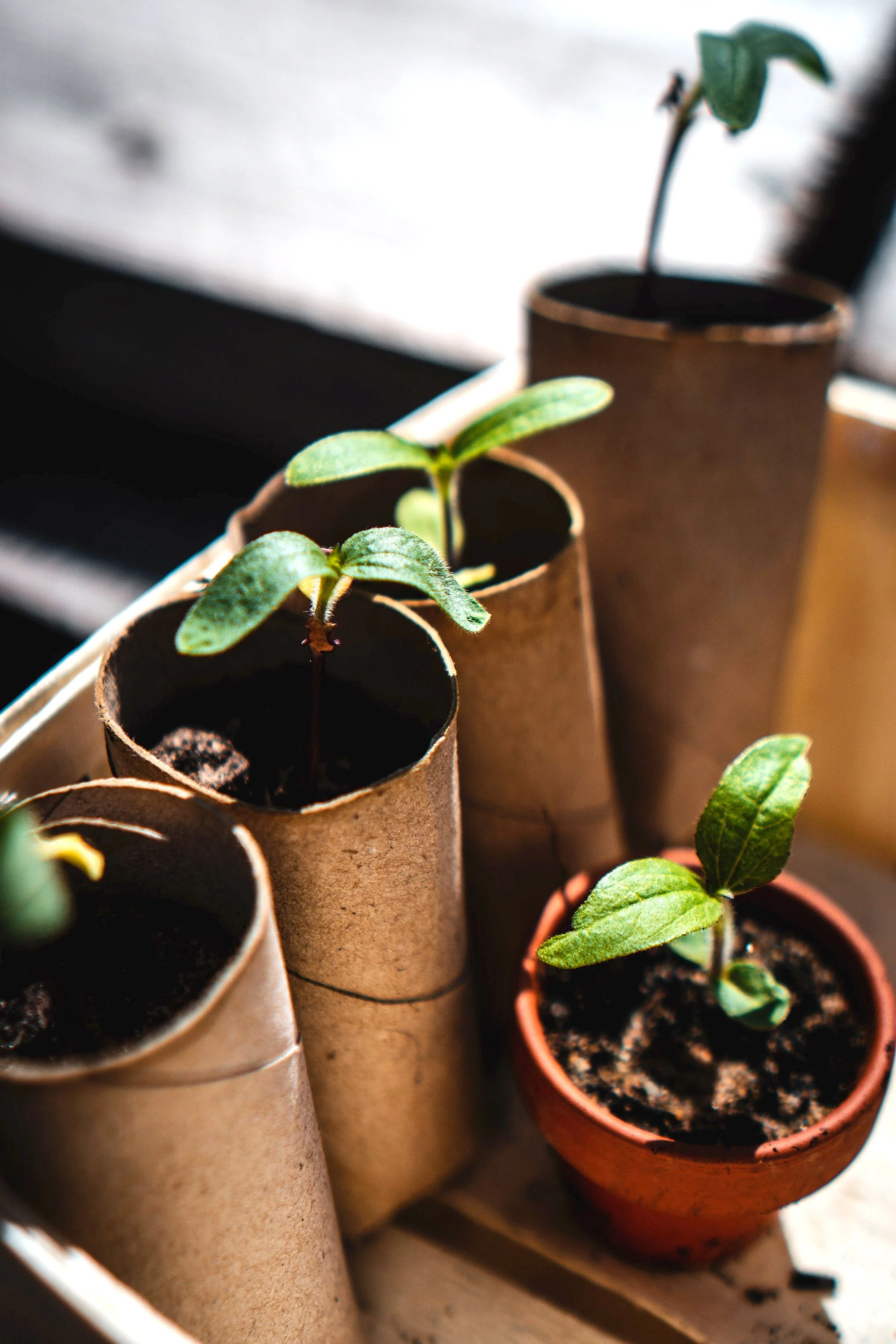
Principle 7 - Use small-scale solutions and be patient
OR focus on quality rather than quantity
💡 A Simple Explanation of the Principles of Permaculture
Nature calls on us to value small-scale actions.
“In nature, the design of a cell shows us that functions are best performed at the smallest possible operational scale (...). Excessive cell growth is generally impossible, but cells sometimes divide uncontrollably; this is often a sign (...) of cancer.”
- D. Holmgren, *Permaculture*
This principle of permaculture stands in contrast to the pursuit of growth at any cost and the systematic application of standardized solutions, which are highly valued in Western society.
As for the need to take one’s time, my collective intelligence instructor reminds us of a key point:
"There's no point in pulling on carrots to make them grow faster."
- Marine Simon, “Everything goes in circles on this earth; we’re the only ones who don’t realize it.”
🔍 Implementation in a transformation initiative
Those who know me know that patience is a challenge for me. Especially when I have a lot of ideas swirling around in my head and the weight of social and climate emergencies on my conscience.
When I started working on sustainability issues at my company, I was on my own and had to manage an organization with more than 15,000 employees and over 200 operational sites.
Needless to say, I was under a lot of pressure to ensure these issues were truly integrated into the heart of the business. I wanted to take action at every level, with everyone, right away.
When I was hired, my CEO said this very simple sentence to me: “We need to change, and I want quality over quantity.”
Simple, yet not so obvious. How can we avoid falling into the trap of superficial changes? How can we achieve both quality and impact?
The focus was on the key needs of people on the ground—the “why” behind the action. The priority was to work with willing and committed partners.
In doing so, I had the opportunity to test and adapt each solution to address social, environmental, and local challenges, in collaboration with operational experts at all levels.
The success of an initiative, despite its challenges, encouraged others to develop pragmatic and sustainable initiatives, contributing to a better world.
So yes, it was hard to decide what to focus on, to find the right partner for the right driver, and to calm my impatience and fear of making mistakes. But it was worth it.
Together, we have developed hundreds of sustainable initiatives in the areas of operations, business, HR, and technology. Together, we have planted various seeds of innovation, which have grown into a beautiful, fertile, and thriving garden.
This motto has guided me throughout my 12 years of work on sustainable transformation initiatives. I have come to understand that quality (in cooperation) enhances the impact of solutions and facilitates their widespread adoption—in a way that is diverse, fluid, and tailored to specific contexts.
🐝 Tips for Getting Active
To maximize your impact in a sustainable way, refocus on the gradual, organic growth of your initiatives and projects.
Here are a few questions to help you amplify the impact of the changes you're making:
In my mission, am I in a mode:
"Quantity and speed"?
“Quality and patience”?
If I'm in "quantity and speed" mode and want to try a different strategy, then:
Which productive and high-quality project(s) can I support?
Which project(s) can I stop, or at least postpone or delegate?
What seed(s) can I plant deliberately and gradually, on a small scale?
“Wemust dare to imagine and trust that others, in other places, are also working toward better solutions—locally, in ways that are a little different from ours—and that the network of all our solutions is probably stronger than a single remedy to be applied across the entire planet.”
If you liked this post, please show your appreciation with a "like" and share it with friends and family who might find it helpful.
This is the best way to support me.
As a reminder, I’d like to highlight the parallels between the 12 operational principles of permaculture and sustainable transformations in organizational systems. If you’re a professional committed to promoting a better society, these principles and insights should help you maximize your impact and inner peace. Here is the first, the second , the 3rd and 4th , 5th, and 6th article. Today we’ll discuss the 6th principle.
Hello to you, agents of change!
I'm Nina Cambadélis, an impact coach and expert in leadership and sustainable transformation.
For more than 10 years, I was in charge of transformation and multifaceted performance initiatives at a multicultural CAC 40 company. What I love to do is help organizations and professionals rethink their business and make them proud to contribute, in their own way, to a world that is more sustainable, more humane, and more respectful of nature.
If you'd like some guidance along the way, contact me!

"6th principle - Use the interfaces and enhance the edges"
OR combine the best of both worlds
💡 EXPLANATION OF THE PERMACULTURE OPERATING PRINCIPLE
In the last article we explored a permaculture principle that calls for “integrating rather than separating” elements in nature, in order to sustain life on Earth.
Nevertheless, this permaculture principle—which refers to interfaces and edges (i.e., boundaries between two systems)—seems to emphasize the concept of boundaries rather than integration. One might therefore wonder whether permaculture philosophy contradicts itself.
Not so fast!
While borders and interfaces define spaces, they also connect and unite them through reciprocal exchanges and interactions.
"Let's take the example of a sunset. It is universally acknowledged as beautiful. The sun on its own or the horizon on its own is far less so: it is the interaction of these two elements that allows nature to express its full potential."
- Solène Pignet, *The Sustainable Entrepreneur's Guide*, p. 63
Quite simply, the dynamic interplay between earth, water, and the sun gives rise to life.
🔍 ILLUSTRATION OF THE PRINCIPLE AS APPLIED TO A TRANSFORMATION MISSION
Today, I’d like to highlight my partners’ stories rather than talk about my own experiences.
Mélibée, a committed company, recently explained how it applies this aspect of permaculture in its daily activities. Agathe and Solenn, its two co-founders, decided to create synergies between their private and public lives.
In the world of work, they help organizations become more responsible, particularly by leveraging B Corp and the FSSD frameworks. In their personal time, they find fulfillment in free dance, meditation, yoga, and other forms of inner exploration.
One day, they brought both worlds together. They created a retreat for their business partners to explore their inner ecology. The results?
Deeper and broader relationships were fostered among the participants.
Professionals shifted their focus between "taking care of oneself" and "taking care of the world."
A reduced sense of eco-anxiety among participants thanks to the "Work That Reconnects," which was central to this retreat.
Mélibée and I have also applied this principle of “valuing edges” together. For the past few years, I have been supporting them as a member of their board of mentors.
Our discussions, our respective areas of expertise, and the help of a friend have led us to a new eye-opening experience in life: a mission to support the Valenciennes Hospital Center in helping its thousands of employees collaboratively develop their five-year plan focused on sustainability issues.
🐝 TIPS TO GET MOVING
Do you want to leverage your strengths to maximize the positive impact of your projects?
Three steps seem essential to me:
Identify, accept, and embrace your uniqueness.
Take a look at your limitations and connect with people and activities that complement them.
Consider how your positioning, your activities, and your choices can create new opportunities.
Specifically, I suggest you ask yourself three questions:
What makes me different?
You can list several aspects of your background, personality, interests, and activities.
Who or what could help me achieve my goals?
Here, think about what you don't usually associate with your activities but could actually complement them. This could involve the overlap between different skills, projects, or partners.
In this project, what might be the most positive ripple effects?
“Usingthe edges and valuing the margin invites us to open ourselves up to what we have not organized or created ourselves, to welcome the surprise.”
IF YOU FOUND THIS POST INSIGHTFUL, PLEASE LIKE IT AND SHARE IT WITH MEMBERS OF YOUR NETWORK WHO MIGHT BENEFIT FROM IT.
IT'S THE BEST WAY TO SUPPORT ME.
As a reminder, I am writing a series on the parallels between the 12 operational principles of permaculture and the conditions for sustainable transformations of organizational systems. Here is the first post, the second one, the third one, the 4th one and the 5th. Today we’ll discuss the 6th principle. If you’re a professional changemaker committed to promoting a better society, these principles and insights should help you maximize your impact and inner serenity.
Hello, Changemakers!
I am Nina, an impact maker coach who specializes in leadership and sustainable transformation.
I have spent the past 10 years leading sustainable change at a Fortune 500 company in a multicultural environment. Through my work, I aim to inspire professionals in organizations to rethink business and make them proud to contribute, in their own way, to a more sustainable, people-centered, and nature-friendly world.
If you'd like support to move forward on your journey with greater impact and ease, contact me!

Principle 6 - "Use interfaces and highlight borders"
OR kill two birds with one stone
💡 A Simple Explanation of the Principles of Permaculture
In the last article, we explored a permaculture principle that calls for “integrating rather than separating” the elements of nature in order to sustain life on Earth.
But this new principle of permaculture, which refers to the notion of an interface (i.e., a boundary between two systems), seems to emphasize the concept of boundaries rather than that of integration. Does the philosophy of permaculture contradict itself?
Wait a minute, butterfly.
While boundaries and interfaces define spaces, they also connect and unite them through mutual exchanges and interactions.
“Let’s take the example of a sunset. Everyone agrees it’s magnificent. The sun on its own or the horizon on its own is far less so: it’s the interaction and interplay of these two elements that allows nature to express its full potential.”
- Solène Pignet, *The Sustainable Entrepreneur's Guide*, p. 63
The coming together of earth, water, and sun gives life. It’s as simple as that.
🔍 Implementation in a transformation initiative
Today, I’d like to highlight illustrations that showcase my partners’ experiences rather than my own.
Mélibée, a socially conscious company, applies this aspect of permaculture to its daily operations. Agathe and Solenn, its two co-founders, have decided to create synergies between their private and public lives.
In the workplace, they help organizations become more responsible, particularly by drawing on B Corp and FSSDmethods. In their free time, they find joy in free-form dance, meditation, yoga, and other forms of inner exploration.
One day, they combined these two worlds. They created a retreat so their partners could explore their inner ecology. The result?
Deeper and broader relationships among the participants.
Professional women who have found a balance between "taking care of themselves" and "taking care of the world."
A reduction in each person’s eco-anxiety thanks to “The Work That Reconnects,” which is at the heart of this retreat.
Mélibée and I have also applied this principle of “making the most of the edges” together. For the past few years, I have been supporting them through their “mentoring sessions.”
Our discussions, our respective areas of expertise, and the help of a friend led us to another surprise in life: a consulting assignment for the Valenciennes Hospital Center to help thousands of employees collaboratively develop their 5-year institutional plan focused on sustainability issues.
🐝 Tips for Getting Active
Do you want to “highlight the borders” to maximize the impact of your projects?
Three steps seem essential to me:
Recognize, accept, and embrace your uniqueness.
Examine your limits and connect with people and activities that complement you.
Ask yourself how your positioning, your activities, and your choices can create new opportunities.
Specifically, I suggest you ask yourself three questions:
What sets me apart?
You can list several items—whether they relate to your background, personality, interests, or activities.
Who or what could help me achieve my goals?
Here, think about things you don’t usually associate with your business but that could actually complement it. These might be the boundaries between different skill sets, projects, or even partners.
In this project, what might be the positive ripple effects?
“Usingborders and making the most of the margins invites us to open ourselves up to what we haven’t organized or created ourselves, to embrace the unexpected.”
If you liked this post, please show your appreciation with a "like" and share it with friends and family who might find it helpful.
This is the best way to support me.
As a reminder, I’d like to highlight the parallels between the 12 operational principles of permaculture and sustainable transformations in organizational systems. If you’re a professional committed to promoting a better society, these principles and insights should help you maximize your impact and inner peace. Here is the first, the second , the 3rd and 4th and 5th article. Today we’ll discuss the 6th principle.
Hello to you, agents of change!
I'm Nina Cambadélis, an impact coach and expert in leadership and sustainable transformation.
For more than 10 years, I was in charge of transformation and multifaceted performance initiatives at a multicultural CAC 40 company. What I love to do is help organizations and professionals rethink their business and make them proud to contribute, in their own way, to a world that is more sustainable, more humane, and more respectful of nature.
If you'd like some guidance along the way, contact me!

Principle 5 - "Integrate rather than separate"
OR HOW TO FORM PARTNERSHIPS TO MAXIMIZE YOUR IMPACT
I highlight the parallels between the 12 operational principles of permaculture and sustainable transformations in organizational systems. If you are a professional committed to promoting a better society, these principles and insights should help you maximize your impact and inner peace. Here is the first, the second , the 3rd and 4th article. Today we’ll discuss the 5th principle.
💡 A Simple Explanation of the Principles of Permaculture
Nature in its unspoiled state bears much more resemblance to English country gardens than to French geometric gardens.
Rational thinking leads us to want to separate the elements of an ecosystem in order to create an artificial “order.”
But the sustainability of nature depends more on the interconnections between species than on competition.
Illustration of the principle of symbiosis: “The sea anemone receives extra food from the clownfish, which in turn receives protection in exchange.”
- Collective Intelligence: Let’s Consciously Co-Create the World of Tomorrow, p. 62
🔍 Implementation in a transformation initiative
Why limit ourselves to a mindset of competition and silos when we need every part of the whole to bring about sustainable organizational transformation?
One day, a manager told me how tensions between teams were eased within a few months.
The sales and operations teams were constantly complaining about each other, blaming one another for their difficulties. The salespeople were “selling anything and everything,” and the operations team was “blocking all access to information.”
After a while, the boss decided to seat them side by side in the same office and encourage them to work together to secure the contracts. A few months later, their collaboration had grown significantly.
This ability to build connections through physical proximity and by working on shared projects really made an impression on me. This principle inspired us when we launched an organization’s “Purpose & Sustainability” roadmap.
Eight innovative pilot projects were jointly defined with country managers and operational staff from a wide range of backgrounds. The initiatives were diverse: innovative projects to promote biodiversity, bonus policies linked to multifaceted performance indicators, and the overhaul of the proposal development process.
Each entity selected the pilot project that would make it a pioneer in this field for the Zone.
After several months of work within cross-functional teams, a flagship event was organized to share feedback and decide on the future rollout of these pilot projects.
I will never forget the smiles, the pride, and the sense of solidarity in the eyes and faces of these close-knit teams as they shared their successes, their challenges, and their proposals for moving forward.
🐝 Tips for Getting Active
For change agents, it is helpful to consider this principle of integration on two levels: external and internal.
Externally, entities positioned along your value chain can be strong partners in achieving the desired transformation. A supplier or customer can help you rethink the eco-design of your products. An NGO or local organization can help you understand the needs of the community so you can add more value.
Internally, all employees will have an impact on the organization’s transformation projects. If they are committed, they will be a driving force and a source of innovation. If they are indifferent or resistant to change, they will create obstacles and roadblocks.
How can you engage your stakeholders in the organization's future?
By not forcing them, by listening to them, by trusting their reality, by communicating with them, and by making suggestions.
How do you get started? Replace your “no” and “yes, but” with“YES, AND.”
Let's take an example. Imagine this: You're presenting your impact project to a colleague, and they share their concerns with you. Instead of:
“No, but you see, the issue is X, and it’s really important that you understand this because X”
Maybe you could try
“Yeah, so I hear that you need X, and that gives me an idea for X—what do you think?”
“‘Stopseparating yourselves and separating things, (...) it means daring to see how much we influence our reality and often reap what we sow.’”
If you liked this post, please show your appreciation with a "like" and share it with friends and family who might find it helpful.
This is the best way to support me.
Hello to you, agents of change!
I'm Nina Cambadélis, an impact coach and expert in leadership and sustainable transformation.
For more than 10 years, I was in charge of transformation and multifaceted performance initiatives at a multicultural CAC 40 company. What I love to do is help organizations and professionals rethink their business and make them proud to contribute, in their own way, to a world that is more sustainable, more humane, and more respectful of nature.
If you'd like some guidance along the way, contact me!

5th principle - "Integrate rather than separate"
OR ASSOCIATE TO MULTIPLY IMPACT
I am creating a series on the parallels between the 12 operational principles of permaculture and the conditions for sustainable transformations of organizational systems. Here is the first post, the second one, the third one, the fourth one. Today we’ll discuss the 5th principle. If you’re a professional changemaker committed to promoting a better society, these principles and insights should help you maximize your impact and inner serenity.
💡 EXPLANATION OF THE PERMACULTURE OPERATING PRINCIPLE
Nature in its unspoiled state is much more like the free-flowing English gardens than the geometric French gardens.
Rational thinking leads us to want to separate the elements of an ecosystem to create an artificial "order." But the sustainability of nature depends more on the interconnection between species than on competition.
Illustration of the principle of symbiosis - “The sea anemone receives an abundance of food from the clownfish, which in return receives protection.”
- Collective Intelligence:Let's Consciously Co-Create the World of Tomorrow, p. 62
🔍 ILLUSTRATION OF THE PRINCIPLE AS APPLIED TO A TRANSFORMATION MISSION
Why get locked into a competitive and siloed mindset when we need every part of the whole to participate in a sustainable transformation of organizations?
An executive once told me how tensions between teams were reduced in just a few months.
The sales and operations teams were constantly complaining about each other, blaming each other for their problems. The salespeople were "selling nonsense," and the operations staff were "blocking all access to information."
After a while, this boss decided to seat them side by side in the same office and encouraged them to work together to secure new business opportunities. A few months later, their collaboration had increased significantly.
This ability to forge meaningful connections by being physically close and working on shared projects has stayed with me. This principle inspired me when we launched the “Purpose & Sustainability” roadmap within an organization.
Eight disruptive pilot programs were jointly defined by that organization’s diverse country managers and operational staff. The projects ranged from innovative initiatives to promote biodiversity and bonus policies tied to multifaceted performance indicators to the redesign of the process for developing proposals.
Each entity selected the pilot project that would make it a pioneer in this field within its zone.
After several months of work in cross-functional teams, a flagship event was organized to gather feedback and decide on the future rollout of these pilot projects.
I will never forget the smiles, pride, and solidarity in the eyes and faces of the united teams as they shared their successes, challenges, and proposals for moving forward.
🐝 TIPS TO GET MOVING
For changemakers, it is helpful to consider this principle of integration on two levels: external and internal.
Externally, all the entities involved in your value chain can be strong partners in achieving the desired transformation. A supplier or a customer, for example, can help you rethink the eco-design of your products. An NGO or a local organization can help you understand the needs of the community so you can create more value.
Internally, all employees will have an impact on the organization's transformation projects. If they are committed, they will be a driving force and a source of innovation. If they are indifferent or resistant to change, they will create obstacles and barriers.
How can we involve stakeholders in the organization's future?
By not pressuring them, by listening to them and trusting their perspective, by exchanging and proposing ideas.
How should one begin?
Turn your "no" and "yes, but" into "yes, and."
Consider an example. Just imagine. You're talking to a colleague about your impact project, and he shares his concerns with you. Instead of:
"No, but you see, the issue is xxx, and it's really important that you understand because xxx"
You might want to try:
"Yes, so I hear that you need xxx, and that gives me the idea of xxx. What do you think?"
“Stopseparating yourself from things, (...) it’s about daring to look at how much we influence our reality and how often we reap what wesow”
IF YOU FOUND THIS POST INSIGHTFUL, PLEASE LIKE IT AND SHARE IT WITH MEMBERS OF YOUR NETWORK WHO MIGHT BENEFIT FROM IT.
IT'S THE BEST WAY TO SUPPORT ME.
Hello, Changemakers!
I am Nina, an impact maker coach who specializes in leadership and sustainable transformation.
I have spent the past 10 years leading sustainable change at a Fortune 500 company in a multicultural environment. Through my work, I aim to inspire professionals in organizations to rethink business and make them proud to contribute, in their own way, to a more sustainable, people-centered, and nature-friendly world.
If you'd like support to move forward on your journey with greater impact and ease, contact me!

4th principle - "Practice self-regulation"
So LET GO OF CONTROL AND GO WITH THE FLOW
I am creating a series on the parallels between the 12 operational principles of permaculture and the conditions for sustainable transformations of organizational systems. Here is the first post, the second one, the third post. Today we’ll discuss the 4th principle. If you’re a professional changemaker committed to promoting a better society, these principles and insights should help you maximize your impact and inner serenity.
💡 EXPLANATION OF THE PERMACULTURE OPERATING PRINCIPLE
Nature regulates itself to sustain itself.
Leaves fall from the tree in the fall to prepare the soil for the coming winter frost.
Every natural phase plays a role in ensuring nature's self-sustainability. A rotting fruit will fall to the ground and give rise to a new seed.
The cycle of the four seasons teaches us that there is a time for everything: birth, growth, decline, and death.
Why should it be any different for businesses and social impact initiatives?
🔍 ILLUSTRATION OF THE PRINCIPLE AS APPLIED TO A TRANSFORMATION MISSION
As a change agent:
Who hasn't felt frustrated when seeing that an initiative wasn't “taking off”?
Who hasn't been surprised to see an old tool suddenly reappear because a new boss discovered it?
The change agent may often feel torn between the long-term vision and the short-term actions on the ground.
To their colleagues, the agent’s desire to do the right thing may come across as an almost tyrannical control over the behaviors of the ecosystem.
Let me tell you a story.
More than a decade ago, I and a few others within an organization pioneered the idea of assessing and reducing its carbon footprint—and doing so for clients.
We launched related training and calculation tools. We presentedmaterialsto demonstrate the value and urgency of these practices. We emphasized the importance of using a company’s internal carbon price to inform operational and business decisions.
Then, there was an echo. We received some positive feedback. But the practice was far from becoming systematic and firmly established in our daily business operations.
I began to wonder if I wasn't missing the point.
And then, sometime before the COVID-19 pandemic, the tide began to turn. During the pandemic, customers started asking for help in becoming “carbon neutral.”
Suddenly, the stars began to align.
Regional and country managers were emphasizing the importance of measuring and reducing the company’s carbon footprint in order to lead by example and then help customers with their own transformation journey.
All of a sudden, analyses and processes were picking up speed at every level.
What is the moral of this story?
Were our efforts premature? Were we useless?
I think it's mainly a matter of timing and determination.
Everything eventually comes to those who wait and are prepared.
🐝 TIPS TO GET MOVING
I believe that the role of changemakers in organizations is as follows:
“Sow seeds, nurture the soil, work with eco-friendly farmers, trust natural cycles, and support harvests.”
So how do you actually do it?
Clearly articulate the “why,” “what,” “how,” and “when” of your project:
Engage your stakeholders by emphasizing the “why” and “what for” of your project,
Create the conditions to collaborate with your stakeholders and bring the “what” to life,
Let them figure out the “how” and “when,” while offering support as needed.
If you feel very frustrated because of a blockage:
Ask yourself, "What stage is my project in?"
Maybe it's hibernation season. If so, find out how to protect the foundation.
Next, move on to a project that is in the pre-flowering stage.
Everything changes, and as the season changes, the new avenues for action will surely become more apparent.
My final word is? Trust yourself and go with the flow.
“Do notfear sadness; it is the vivid reminder that something beautiful once existed.”
IF YOU FOUND THIS POST INSIGHTFUL, PLEASE LIKE IT AND SHARE IT WITH MEMBERS OF YOUR NETWORK WHO MIGHT BENEFIT FROM IT.
IT'S THE BEST WAY TO SUPPORT ME.
Hello, Changemakers!
I am Nina, an impact maker coach specializing in leadership, sustainability, and organizational transformation.
I have spent the past 10 years leading sustainable change at a Fortune 500 company in a multicultural environment. Through my work, I aim to inspire professionals in organizations to rethink business and make them proud to contribute, in their own way, to a more sustainable, people-centered, and nature-friendly world.
If you'd like support to move forward on your journey with greater impact and ease, contact me!

Principle 4 - "Implement self-regulation"
OR HOW TO LET GO OF CONTROL AND GO WITH THE FLOW
I highlight the parallels between the 12 operational principles of permaculture and sustainable transformations in organizational systems. If you are a professional committed to promoting a better society, these principles and insights should help you maximize your impact and inner peace. Here is the first, the second and the third article. Today we’ll discuss the 4th principle.
💡 A simple explanation of how permaculture works
Nature regulates itself to ensure its survival.
Leaves fall from the tree in the fall to prepare the ground for the coming winter frost.
The cycle of the four seasons teaches usthat there is a time for everything: birth, growth, decline, and death.
Each phase plays a role in ensuring nature's self-sustaining cycle. A rotting fruit will fall to the ground and cause a new seed to sprout.
Why should it be any different in our companies and our impact-driven initiatives?
🔍 Implementation in a transformation initiative
As agents of change,
Who hasn't felt frustrated when they saw that an initiative wasn't "taking off"?
Who hasn't been surprised to see an old tool resurface out of nowhere because a new boss discovered it?
Change agents may feel torn between a long-term vision and short-term actions on the ground.
Their desire to do the right thing can sometimes be perceived by their colleagues as an almost tyrannical control over the behavior of the ecosystem.
I'm going to tell you a story.
More than ten years ago, a small group of professionals and I set out with our pilgrim’s staffs to encourage a company to assess and reduce its carbon footprint—as well as that of its customers.
To that end, we have launched training programs and related calculation tools.
We presented documents to demonstrate the value and urgency of these practices. We emphasized the importance of using the internal carbon price to facilitate operational and business decisions.
There was some response. A few positive reactions. But the practice was far from becoming routine and firmly established in the company's daily operations.
I was starting to wonder if I wasn't way off base.
And then, some time before the COVID-19 pandemic, the tide began to turn.
During the pandemic, customers began asking for help in achieving “carbon neutrality.”
And then, things gradually started to fall into place.
Regional and country leaders emphasized the importance of measuring and reducing companies’ carbon footprints in order to lead by example and help customers with their own transformation efforts.
Suddenly, analysis and processes accelerated at every level.
What is the moral of this story?
Were our efforts premature? Were we wasting our time because all we needed to do was wait?
I think it's mainly a matter of timing and determination.
Everything comes to those who wait and lay the groundwork.
🐝 Tips for Getting Active
It seems to me that the fundamental role of change agents within organizations is illustrated by the following statement:
Sow seeds, nourish the soil, hire “farmers” who respect the land, trust in natural cycles, and nurture the crops.
So how do we actually go about doing that?
I suggest you clearly outline the "why," "what," "how," and "when" of your project:
Engage your stakeholders by highlighting the "why" and "purpose" of your project,
Create the conditions to co-create and update the "what" with your stakeholders,
Trust them to figure out the "how" and the "when," while supporting them whenever necessary.
If you feel very frustrated when you hit a roadblock,
Ask yourself: “What season is my project in?”
It might be hibernation season. If so, here's how to protect your foundation.
Then turn your attention to a project that is in the pre-bloom stage.
Everything changes, and when the season changes, new avenues for action will surely become clearer.
In short? Trust yourself and go with the flow.
“Do notfear sadness; it is the vivid reminder that something beautiful once existed.”
If you liked this post, please show your appreciation with a "like" and share it with friends and family who might find it helpful.
This is the best way to support me.
Hello to you, agents of change!
I am Nina Cambadélis, an impact coach and an expert in leadership and sustainable organizational transformation.
For more than 10 years, I was in charge of transformation and multifaceted performance initiatives at a multicultural CAC 40 company. What I love to do is help organizations and professionals rethink their business and make them proud to contribute, in their own way, to a world that is more sustainable, more humane, and more respectful of nature.
If you'd like some guidance along the way, contact me!

3rd Principle - "Get a production"
OR THE NEED TO EXPERIMENT
I am creating a series on the parallels between the 12 operational principles of permaculture and the conditions for sustainable transformations of organizational systems. Here are the first and second posts. Today we’ll discuss the third principle. If you are a professional changemaker committed to promoting a better society, these principles and insights should help you maximize your impact and inner serenity.
💡 Explanation of the permaculture operating principle
"In the absenceof immediate and truly useful output, a system will wither away; conversely, a system will flourish if it isproductive."
- David Holmgren, Permaculture
In permaculture, this principle emphasizes the importance of sowing seeds quickly so that crops can grow. The nuance of the definition in the quote lies in the word“useful.”
It is about producing results, but doing so in a way that benefits the earth, animals, and humans. It is important to create results that nurture the soil and are self-sustaining.
🔍 Illustration of the principle applied to a transformation initiative
Our society applies this concept of production a little too strictly.
The social norm, at least in the West, favors swift action, even at the risk of forgetting how to simply be. However, it is the combination of action and being, in the service of a purpose, that enables us to persevere.
Let's look at an example.
I had the pleasure of advising an executive committee on matters of governance and leadership.
The participants demonstrated openness, intellectual curiosity, and a desire to quickly put what they learned into practice.
They were so eager to move forward that they were frustrated not to have a ready-to-use action plan after just two short sessions. Yet, it was risky to focus on the “doing” before clarifying the intention behind the action.
At the end of a debrief, I shared these thoughts:
"It's great to want to move fast. But if you get to Norway in one day when you'd rather be in Italy, what's the point of speed? If you move forward without knowing where you want to go or how to get there, you risk ending up in the wrong place and wasting a lot of time, energy, and credibility with your teams."
Following this discussion, the group identified a path forward:
They decided to take the time to refocus on the original purpose behind this team coaching on governance and leadership.
They clarified what they wanted to get out of it—for themselves, their teams, and their company.
They gave themselves the freedom to experiment within their committee, without the pressure to succeed, rather than imposing arbitrary changes on the organization.
A laboratory phase is valuable for determining what works, what needs refinement, and what should be avoided.
🐝 Tips for Getting Active
Dear change agents,
I’d like to suggest two principles that your organizations should keep in mind before, during, and after each transformation project:
Experiment
It is helpful to test an idea on a small scale within your organization as a "pilot" project.
This will enable your community to learn, refine, and improve—or even radically change—your approach with your partners and beneficiaries.
You may consider these initiatives to be biodegradable.
Celebrate
Your community will need to celebrate often and repeatedly over time.
The results of each step can be a cause for celebration:
Your willingness to take a chance and try something new,
Your mistakes as evidence of your courage, potential sources of innovation and progress,
Your successes and the keys to success.
"Thebest way to predict your future is to create it"
If you found this post helpful, please like it and share it with your network members who might find it useful.
It's the best way to support me.
Hello, Changemakers!
I am Nina, an impact maker coach specializing in leadership, sustainability, and organizational transformation.
I have spent the past 10 years leading sustainable change at a Fortune 500 company in a multicultural environment. Through my work, I aim to inspire professionals in organizations to rethink business and make them proud to contribute, in their own way, to a more sustainable, people-centered, and nature-friendly world.
If you'd like support to move forward on your journey with greater impact and ease, contact me!
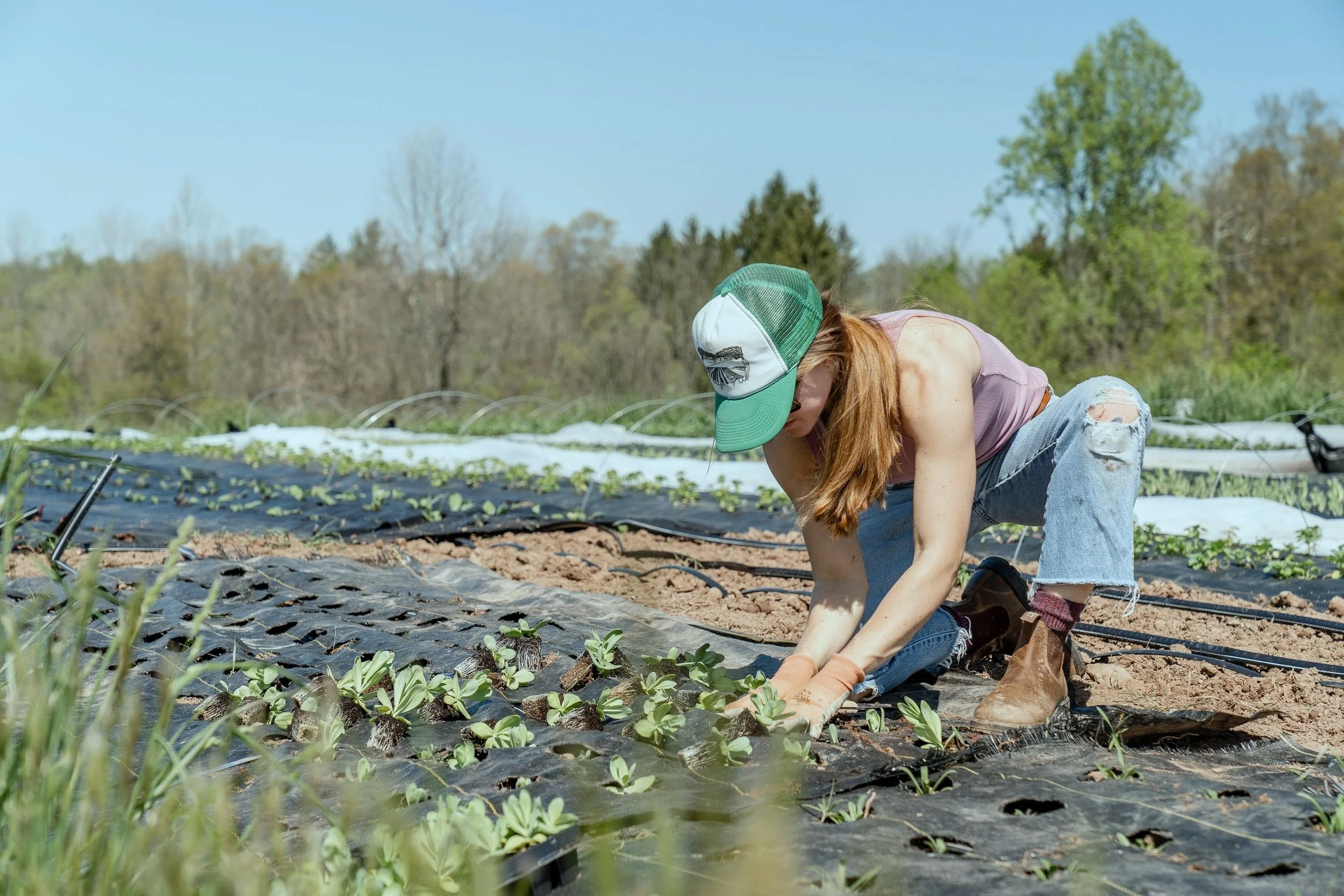
Principle 3 - "Achieve Production"
OR THE NEED TO EXPERIMENT
I highlight the parallels between the 12 operational principles of permaculture and sustainable transformations in organizational systems. If you are a professional committed to promoting a better society, these principles and insights should help you maximize your impact and inner peace. Here are the first article and the second article. Today we’ll discuss the third principle.
💡 A simple explanation of how permaculture works
“In the absence of immediate and truly useful output, a system withers; conversely, a system flourishes if it is productive.”
- David Holmgren, Permaculture
In permaculture, this principle emphasizes the importance of sowing seeds quickly so that crops can grow. The subtlety of the definition lies entirely in the word “useful.”
The goal is certainly to produce results, but to do so in a way that benefits the land, animals, and people. It is important to create outcomes that nurture the soil so that it can sustain itself and endure.
🔍 Implementation in a transformation initiative
Our company takes this production concept a little too literally.
Social norms, at least in the West, prioritize swift action, at the risk of forgetting to simply be. Yet it is the combination of action and being, in service of a purpose, that allows us to endure.
Let's look at a concrete example.
I had the pleasure of advising an executive committee on governance and leadership issues.
The participants demonstrated openness, intellectual curiosity, and a desire to quickly apply what they had learned to specific actions.
They were so eager to move forward that they were frustrated at not being able to come up with a ready-made action plan after just two short sessions. There was a risk, then, in jumping into the “doing” before clarifying the intention behind the action.
At the end of a debriefing, I shared these thoughts:
“It’s great to want to move quickly. But if you arrive in Oslo in one day when, deep down, you’d rather be in Rome, what’s the point of rushing?”
"If you move forward without being clear about where you want to go and how, you risk ending up in the wrong place, wasting time and energy, and losing credibility with your teams."
Following this discussion, a course of action emerged for the group:
They decided to take the time to refocus on the original purpose behind this team coaching session on governance and leadership.
They clarified what they wanted to gain from it—for themselves, their teams, and their company.
They gave themselves the freedom to experiment within their committee, without the pressure to succeed, rather than imposing arbitrary changes on the organization.
A pilot phase is invaluable for testing what works, what needs to be refined, and what should be avoided.
🐝 Tips for Getting Active
As agents of change, I suggest two principles that you should emphasize within your organization before, during, and after every transformation project:
The Experiment
It's a good idea to test your ideas on a small scale within your organization as part of a "pilot" program.
This will enable your community to learn, refine, and improve—or even radically change—your approach to working with your partners and beneficiaries.
You can consider these initiatives to be biodegradable.
The Celebration
Your community will need to celebrate often and on many occasions over time.
The results of each step can be a cause for celebration:
your willingness to dare to try something new,
your “mistakes” as proof of your courage, and as potential sources of innovation and progress,
your achievements and the keys to success.
"Thebest way to predict the future is to create it."
If you liked this post, please show your appreciation with a "like" and share it with friends and family who might find it helpful.
This is the best way to support me.
Hello to you, agents of change!
My name is Nina Cambadélis. I am an impact coach and leadership expert specializing in sustainable development and organizational transformation.
For more than 10 years, I have been responsible for organizational transformation and multifaceted performance initiatives within a company and a multicultural environment. What I love about my work is helping organizations and professionals rethink business and making them proud to contribute, in their own way, to a world that is more sustainable, more humane, and more respectful of nature.
If you'd like some guidance along the way, contact me!

2nd Principle - “Collect and store energy"
OR HOW TO Mix and Match Activities to Generate Lasting Energy
This article is part of a series on the parallels between the 12 operational principles of permaculture and the conditions for sustainable transformations of organizational systems. Here is the first post. If you are a professional changemaker committed to promoting a better society, these principles and insights should help you maximize your impact and inner serenity.
💡 Explanation of the permaculture operating principle
Nature doesn't need a gardener.
It is designed from the ground up to meet its needs for water, sunlight, wind, and nutrients, regardless of the season or location. It adapts itself to the characteristics of a given environment—whether arid, icy, or humid—in order to develop, distribute, and store the resources necessary for its survival.
Nature's goal is to use energy respectfully and sparingly, with the least amount of effort.
🔍 Illustration of the principle applied to a transformation initiative
Just like nature, a change maker needs to practice what they preach when it comes to moderation.
A change agent needs time, creativity, knowledge, and support—but above all, a great deal of energy to sustain themselves and share with their ecosystem.
I remember a member of my team arriving at a meeting exhausted.
She felt that the creation of a cross-functional committee to promote eco-friendly initiatives in the office was weighing her down.
During our discussion, we sought to understand the sources of resistance, the issue of member commitment, and the key elements needed to make a real impact. We were able to identify ways to adapt our approach to align with the resources at our disposal, as well as the strengths and flexibility of each member. This plan was intended to strengthen the project’s shared governance and conserve everyone’s energy while maximizing opportunities for pride.
She seemed relieved. Still, one thing was missing: her ability to store and replenish her energy.
I asked her, “What projects are energizing you right now?” Once these elements were identified, I simply advised her to alternate between and mix energizing and draining tasks throughout her day. This would naturally recharge her energy without leaving her feeling drained. This dynamic creates a virtuous cycle because energy is contagious.
A few years later, after many subsequent successes, she told me that this change had been crucial to achieving her goals
🐝 Tips for Getting Active
Fill up on energy just as you would stock up on groceries.
Just because the market is full of good food doesn't mean you're going to take it all home. That would be too expensive, too much to unpack, and impossible to eat before the expiration date.
So, yes, there are billions of projects you'd like to start, many people to meet, decision-makers to convince, partnerships to form, emails to write, kick-off meetings to organize, dozens of conferences to attend, and stacks of books to devour. But you need to be selective.
We need to recognize our level of motivation, our intellectual dynamism, and our physical fitness so that we can manage our high-impact projects over the long term.
Do you feel guilty that you might not be doing enough to address the climate and social crises?I understand.
Now, let’s look at it from a different angle.
On July 28, our organization exhausted the annual budget of natural resources. Earth Overshoot Day marks the date when humanity has used up all the biological resources that the Earth regenerates over the course of an entire year. As a change maker, you can work to bring about changes in your ecosystems to stop overspending natural resources through overproduction and overconsumption.
Why are you doing to yourself the very thing you're fighting against? Why are you wasting your energy?
I am not here to judge, but rather to serve as a wake-up call. I often find myself overspending my energy while working on my projects. I try to get back on track as soon as possible. This is important so that I can lead by example and maximize both my impact and my well-being at the same time. It is challenging to do. Yet, it is crucial.
"Productivityis only valuable if it allows you to have a balanced life "
So, are you ready to generate the kind of energy that lasts? What is your first step in this direction?
If you found this post helpful, please like it and share it with your network members who might find it useful.
It's the best way to support me.
Hello everyone, I'm Nina Cambadélis, an independent coach and facilitator specializing in sustainability and organizational transformation. I'm also a changemaker working for the leader in environmental services.
Through my work, I aim to inspire professionals to rethink business and make them proud to contribute, in their own way, to a more sustainable, humane, and nature-friendly world.
If you would like assistance with:
Become the changemaker you want to be for the world you envision
Find and assert your leadership, or foster the emergence of new leadership styles
Make sustainability and purpose-driven initiatives central to your organization
Accelerate engagement within your ecosystem to drive systemic change
Make an impact while conserving energy and promoting well-being
Here is a link to an exploratory call and a form to provide more details about your goals and challenges: English

Principle 2 - “Collect and store energy”
Or: How to Mix Up Activities to Stay Engaged Over Time
I thought it would be helpful to draw a parallel between the 12 operational principles of permaculture and sustainable transformations in organizational systems. If you’re a professional committed to promoting a better society, these principles and insights should help you maximize your impact and inner peace. Here’s the first article.
💡 A simple explanation of how permaculture works
Nature doesn't need a gardener.
It is designed from the outset to meet its own needs for water, sunlight, wind, and nutrients, regardless of the season or location. It adapts to the characteristics of a given environment—whether arid, frozen, or humid—in order to develop, distribute, and store the resources necessary for its survival.
The goal is to follow a plan that requires minimal energy and effort.
🔍 Implementation in a transformation initiative
Just like nature, an agent of change must walk the talk when it comes to living simply.
These professionals need time, creativity, knowledge, support, and above all, above all, a great deal of energy to sustain themselves over the long term and share that energy with their ecosystem.
I remember one of my team members arriving at a meeting completely exhausted.
She felt as though she were single-handedly driving the creation of a cross-functional committee to promote eco-friendly practices in the office.
As we discussed, we tried to understand the sources of resistance, the levels of commitment among members, and what was essential to making a real impact. We explored how to adapt based on each member’s resources, strengths, and room to maneuver. We developed a plan to strengthen the project’s shared governance, conserve everyone’s energy, and maximize opportunities for pride.
She seemed relieved. But, as far as I was concerned, one thing was missing: how to store and replenish her energy. I asked her, “What projects give you energy these days?” Once we’d identified those, I simply advised her to alternate and mix energizing activities with those that drain her energy throughout her day. The key is to recharge your energy naturally, without pushing yourself too hard. This dynamic creates a virtuous cycle because energy is contagious.
A few years later, after many collective successes, she told me that this change had been a turning point.
🐝 Tips for Getting Active
Recharge your energy just like you'd stock up on groceries.
Just because the market is full of good food doesn't mean you're going to bring the whole thing home. It would be too expensive, impossible to store, and impossible to eat before the expiration date.
So, yes, there are billions of projects you’d like to launch, countless people to meet, decision-makers to convince, partnerships to forge, emails to write, “kick-off” meetings to organize, dozens of conferences to attend, and stacks of books to devour. But it’s important to be selective.
We must pay attention to our levels of motivation, intellectual energy, and physical fitness so that we can sustain our high-impact projects over the long term.
Do you feel guilty that you’re not doing enough in the face of climate and social crises? I understand. Now, let’s look at things from a different perspective.
July 28 marked Earth Overshoot Day. We have already consumed the resources that the planet can generate in a single year. As an agent of change, you are surely trying to bring about shifts in individual and collective practices in order to stop overconsuming natural resources.
So why do you do to yourself the very things you fight against in society? Why waste your energy?
Far be it from me to judge. I'm just trying to raise awareness.
I find myself spending too much energy on my projects. I try to get back on track as soon as possible. It's important to lead by example and to bring my ideas to life.
I want to show that maximizing impact and well-being go hand in hand. It’s a challenge to tackle. A journey. Yet it’s crucial.
"Productivityis only valuable if it allows you to have a balanced life."
So, are you ready to generate the kind of energy that lasts? What would be your first step in that direction?
If you liked this post, please show your support by liking it and sharing it with friends and family who might find it helpful. That’s the best way to support me.
Hello to you, agents of change!
My name is Nina Cambadélis, and I am an impact coach specializing in sustainable development and organizational transformation. I am myself an agent of change within a company committed to ecological transformation.
What I love to do through my work is to encourage professionals to rethink business and make them proud to contribute, in their own way, to a world that is more sustainable, more humane, and more respectful of nature.
If you find yourself in one of these situations and would like some support along the way, please contact me:
Become the agent of change you want to see in the world you hope for.
Discover and assert your leadership.
Make positive impact and purpose central to your organization.
Accelerate engagement within your ecosystem to drive systemic change.
Make an impact while conserving energy and promoting well-being.
Collaborate more effectively with various organizations to build a committed community and develop innovative solutions.
Here is a link to schedule an exploratory and the form to further outline your goals and challenges.

1st Principle - “Observe and interact”
This article is part of a series on the parallels between the 12 operational principles of permaculture and the conditions for sustainable transformations of organizational systems. If you are a professional changemaker committed to promoting a better society, these principles and insights should help you maximize your impact and inner serenity.
Principle 1 -
Understand the soil so you can plant the right seeds
💡 Explanation of the permaculture operating principle
"In vegetable permaculture, it is recommended that when you arrive on a plot of land, you should not do anything there for a whole year, but rather observe it throughout the four seasons. (...) Observe, observe, observe—and then build a relationship with what is already there."
-Marine Simon. Everything goes in circles on this earth; we're the only ones who don't realize it.
🔍 Illustration of the principle applied to a transformation initiative
When I began my transformation mission in Japan back in 2016, I spent my first days, weeks, and months observing the activities and interviewing members of this operational unit.
This may seem obvious, but such a preliminary analysis is often avoided or skipped because of:
the internal pressure we face to demonstrate our added value as soon as possible,
management's ambition to get things done quickly,
the employees' eagerness to understand what we are actually going to do.
What does “observing and interacting” mean in practical terms?
Two of us were in charge of what we called the “Evolution mission” for a business unit with over 5,000 employees.
It took us several months to assess the situation and expectations through more than a hundred qualitative individual interviews, dozens of field visits, and collaborative workshops with a representative sample of business team members.
At every moment, I forced myself to set my own ideas aside. I spent my time listening—fully and without judgment—to the members of the existing system. It was time to make room for what they wanted and needed to say, allowing time for detours.
Here are all the fruits of this seemingly "unproductive" time:
Clarity regarding the strengths, needs, and obstacles within the ecosystem.
Identification of potential allies and sources of resistance.
Interlocutors who feel reassured as a result of being shown respect, curiosity, humility, and openness.
The beginning of mutual trust arising from the creation of deep moments of connection between the interviewees and the interviewer.
There is no doubt that this time of interaction without interference prevented me from blindly labeling things and wasting time later. This is one of my fondest memories.
🐝 Tips for Getting Active
If you're starting a new assignment:
Try to identify different members of your ecosystem that you might encounter—just like a journalist would—without any preconceived notions.
If you can't set aside official time, suggest meeting for coffee or lunch.
It is best to focus on qualitative discussions first. Quantitative surveys can then be useful for confirming impressions, highlighting trends, and providing reassurance through data.
It is people who will tell you what seeds to plant and where.
As our team coaching instructor, Michele Darmouni reminded us, "Everything starts at the beginning."
"The beginning is half of everything"
If your mission is already underway, don't worry! You can offer to meet with ecosystem members to discuss and better understand their experiences. It's never too late to start!
If you found this post helpful, please like it and share it with your network members who might find it useful.
It's the best way to support me.
Hello everyone, I'm Nina Cambadélis, an independent coach and facilitator specializing in sustainability and organizational transformation. I'm also a changemaker working for the leader in environmental services.
Through my work, I aim to inspire professionals to rethink business and make them proud to contribute, in their own way, to a more sustainable, humane, and nature-friendly world.
If you would like assistance with:
Become the changemaker you want to be for the world you envision
Find and assert your leadership, or foster the emergence of new leadership styles
Make sustainability and purpose-driven initiatives central to your organization
Accelerate engagement within your ecosystem to drive systemic change
Make an impact while conserving energy and promoting well-being
Here is a link to an exploratory call and a form to provide more details about your goals and challenges: English

Principle 1 - “Observe and Interact”
Understanding the soil needed to plant the right seeds
💡 A simple explanation of how permaculture works
“In vegetable permaculture, it’s recommended that when you first arrive at a plot of land, you do nothing there for an entire year but observe it throughout the four seasons. (...) Observe, observe, observe—and then connect with what’s already there.” Everything goes in circles on this earth; we’re the only ones who don’t realize it, Marine Simon.
🔍 Implementation in a transformation initiative
When I began my mission to transform the organization and its culture in Japan, I spent my first few days, weeks, and months observing operations and interviewing members of that operational unit.
It seems obvious, but we often avoid it or rush through it because of:
The internal pressure to act quickly to demonstrate one's added value,
Management's expectation that things will move forward quickly,
Questions from employees eager to understand what we’ll actually be doing.
In practical terms, what does that mean?
There were just the two of us for a country with more than 5,000 employees.
It took us several months to assess the current situation through more than a hundred qualitative individual interviews, dozens of field visits, and collaborative workshops (this was a representative sample).
Every moment, I forced myself to put my thoughts aside.
I spent my time listening—fully and without judgment—to the members of the existing system. It was time to give them space to say what they wanted and needed to say, taking the time to explore different angles.
Is it really worth it? The rewards of this seemingly “unproductive” time:
Understanding the ecosystem’s strengths, needs, and obstacles.
Identifying potential allies and sources of resistance (you can't please everyone, especially as a young foreign woman in a leadership position).
Reassuring those involved through the respect, curiosity, humility, and openness demonstrated.
Building relationships and creating meaningful moments of connection—ones that are not only motivating but also beneficial in the long run.
There's no doubt about it: that time spent interacting without interference saved me from fumbling around in the dark and wasting time later on. It's one of my fondest memories. Anything was possible.
🐝 Tips for Getting Active
If you're starting a new mission:
Try to identify different members of your ecosystem whom you might encounter, just as a journalist would—without any preconceived notions.
If you don't have an official time slot, suggest meeting for coffee or lunch.
It's better to prioritize meaningful interactions.
Quantitative surveys can be useful for confirming impressions, highlighting trends, and providing reassurance through data.
It is human beings who will subtly show you which seeds to plant where.
“‘Thebeginning is half of everything’”
As our wonderful team-coaching instructor, Michèle Darmouni, reminded us, “It all starts at the beginning”!
If your project is already underway, don’t panic! You can suggest holding a check-in to understand your colleagues’ experiences. It’s never too late to start.
If you liked this post, please show your support by liking it and sharing it with friends and family who might find it helpful. That’s the best way to support me.
Hello to you, agents of change!
My name is Nina Cambadélis, and I am an impact coach specializing in sustainable development and organizational transformation. I am myself an agent of change within a company committed to ecological transformation.
What I love to do through my work is to encourage professionals to rethink business and make them proud to contribute, in their own way, to a world that is more sustainable, more humane, and more respectful of nature.
If you find yourself in one of these situations and would like some support along the way, please contact me:
Become the agent of change you want to see in the world you hope for.
Discover and assert your leadership.
Make positive impact and purpose central to your organization.
Accelerate engagement within your ecosystem to drive systemic change.
Make an impact while conserving energy and promoting well-being.
Collaborate more effectively with various organizations to build a committed community and develop innovative solutions.
Here is a link to schedule an exploratory and the form to further outline your goals and challenges.

What if Changemakers’ success could be measured by their disappearance?
“How do you deal with the lack of recognition?”
“How do you know your efforts are worthwhile?”
“Have you ever wondered if the time you spend in front of your computer or in meetings could really contribute to the challenges facing the world today?”
"How do you know when it's time to pull out?"
I remember hearing those questions during one of my speeches to a group of corporate sustainability advocates. Such doubts were nothing new to me. I’ve heard them often over the past decade. I’ve experienced them myself.
If you're working to bring about sustainable change and if these questions speak to you, this article is for you! Maybe it's time to rethink what success means to you as a change agent.
Your value does not lie in being recognized as great or indispensable. Your success lies in your ability to fade into the background, to become useless.
I can sense your knee-jerk reaction:
"Really?"
“No, but the poor girl has been smoking.”
"What a naive ideal!"
"I'm not Buddha"
"What is she talking about?"
The genuine external recognition you’ll receive from your ecosystem will be nothing more than empty praise. That’s good news. Let me explain.
You may remember a time when a colleague proudly explained a sustainable solution to you... one that you had spent months trying to get him to pay attention to. You probably had to bite your tongue to keep from snapping at him. Well, what you thought was an affront was, in fact, a sign of recognition. It was proof of your legitimacy, not your insignificance.
Your goal is for your transformation project to be fully embraced by your ecosystem, isn't it? Change is successful precisely because it becomes the new norm. As a result, the behaviors and ways of thinking that seem strange today will be "business as usual" tomorrow. Everyone will embody the desired change. But by then, you, too, will have become just like everyone else.
Your banality, your invisibility, will be your success. It is precisely because your words have become useless—because they have become redundant in light of the behaviors around you—that you have succeeded. The more your conversation partners go out of their way to demonstrate that they, too, are extremely active in support of the environment, society, shared governance, or new forms of management, the more you will be able to gloat. The change will take shape outside of you. It will overtake you.
Your mission is to disappear and, for a change, to remain visible.
Take action toward change
When I shared this vision with my relatives, peers, employees, managers, and clients, I often saw a sense of relief in their eyes.
Here are some ways people have responded to this approach:
“It makes me think about my role as a mother. I’m here to help my child reach a point where they no longer need me.”
“A long time ago, I was involved in a change management project aimed at simplifying access to health services in my country. I spent hours trying to convince doctors to embrace a process that would reduce their administrative workload and increase their availability to patients. Last week, I benefited from this process and realized that it has become the norm. I don’t care whether or not my name is mentioned. I am proud to see the positive impact it has had on healthcare providers and patients.”
“Our big boss came back to our goal, which was eventually set aside due to the new sustainability and purpose-driven standards. He loves and promotes this vision. It’s motivating.”
"I am proud to see that this event is a success even without me. This movement is bigger than me."
Some may still have their doubts. I understand. I myself have often wondered if I was in serious denial about reality.
Until the day I realized that my mission was to create the conditions for sustainable change, not to change all business models and practices on my own. My mission was to inspire, support, and challenge committed professionals to forge a collective commitment, in order to bring about systemic change within a given context.
Today, after 10 years of experimentation, I know that this is where I belong and that it’s worth it. I’ll tell you more about my approach to creating these conditions and ways to proudly step back.
Tool
What matters now is helping you avoid years of self-doubt by changing your perspective on success. Here are some questions to help you define your ambition:
At what stage of your transformation project would you know it's time for you to step aside with pride?
What would you have created at your level? What legacy would you leave behind?
How would you feel about your contribution?
How does your view of external recognition change when you consider that your success can be measured by your ability to gradually fade into the background?
Now, what is the first thing you need to do to move toward that kind of success?
Quote
“Thegreatness of a man lies in the fact that he is a bridge, not an end.”
Call to Action
As a changemaker, if this message inspires you to think about success in a different way, please like and share it with the people around you, and subscribe to get notified when new articles are posted.
Hello everyone, I’m Nina Cambadélis, a coach and facilitator specializing in sustainability and organizational transformation. I’m also a corporate changemaker responsible for embedding my company’s purpose at the heart of the business.
Through my work, I aim to inspire professionals to rethink business and make them proud to contribute, in their own way, to a more sustainable, humane, and nature-friendly world.
If you would like assistance with:
Become the changemaker you want to be for the world you envision
Find and assert your leadership, or foster the emergence of new leadership styles
Make sustainability and purpose-driven initiatives central to your organization
Accelerate engagement within your ecosystem to drive systemic change
Make an impact while conserving energy and promoting well-being
Here is a link to an exploratory call and a form to provide more details about your goals and challenges: English

What if the success of the agents of change were to disappear?
"How do you deal with a lack of recognition?"
"How do you know your efforts are worth it?"
"Have you ever wondered if the days you spend in front of your computer or in meetings could actually help address the challenges of today's world?"
“How do you know when it’s time to step down?”
I remember hearing these questions during one of my presentations to a corporate CSR/SD community. These doubts were nothing new to me. These concerns have often been raised over the past ten years. I have experienced them myself.
If you’re working toward sustainable change and these issues resonate with you, perhaps it’s time to rethink what success means to you as an agent of change.
Your worth does not lie in being recognized as amazing or indispensable. Your success lies in your ability to fade into the background, to become unnecessary.
I can already sense some instinctive reactions:
"Really?"
"No, but the poor girl smoked."
"How naive!"
"I'm no Buddha."
"What is she talking about?"
The external recognition you’ll receive from your ecosystem will only be superficial. And that’s good news.
You may remember a time when a coworker proudly explained a solution to you… one that you’d spent months trying to get across to them. You probably had to bite your tongue to keep from snapping at them. Well, what you thought was an insult was, in fact, a sign of appreciation. It was proof of your value, not your insignificance. Let me explain.
Your goal is for your transformation project to be fully accepted by your ecosystem, isn’t it? Change is successful only when it becomes the new norm. Consequently, behaviors and ways of thinking that seem strange to you today will be “business as usual” tomorrow. Everyone will embody the desired change. But then, you, too, will have become just like everyone else.
Your ordinariness, your invisibility, will be proof of your success. It is because your words will have become unnecessary—because they will have become redundant in light of the behaviors around you—that you will have succeeded. The more your conversation partners strive to prove that they, too, are highly active in support of the environment, society, shared governance, or new forms of management, the more you will be able to rejoice. Change will take shape outside of you. It will transcend you.
Your mission is to fade into the background and ensure that change becomes the norm—visible and accepted as a matter of fact.
Take action to bring about change!
When I’ve shared this vision with my loved ones, my peers, my team, my managers, and my clients, I’ve often seen a sense of relief in their eyes and their shoulders relax.
Here are a few examples of how this approach has been applied:
"That reminds me of my role as a mother. I'm here to help my child reach a point where they no longer need me."
"A long time ago, I took part in a transformation project to simplify access to health care services in my country. I spent hours trying to convince doctors to adopt a process that would reduce their administrative workload and increase their availability to patients. Last week, I benefited from this process and realized that it had become the norm. It doesn’t matter to me whether my name is mentioned or not. I’m proud to see the positive impact it’s having on doctors and their patients."
"Our boss revisited our goal of becoming obsolete, because that would mean that the practices central to our purpose would truly be embedded. He loves and shares this vision. It's great to see that."
“I’m proud to see that this event is a success even without me. This movement is bigger than me.”
Some people may remain skeptical. I understand them. I, too, have often wondered if I wasn't in a state of serious denial about reality.
Until the day I realized that my mission was to create the conditions for lasting change— not to change every business model and every practice on my own. My mission was to inspire, support, and challenge committed professionals in order to foster a collective commitment to systemic change within a given context.
Today, after 10 years of experimentation, I know this is where I belong and that it’s worth it. In future articles, I’ll tell you more about my approach to creating these conditions and the prospects for my proud disappearance.
THE TOOL
In the meantime, what matters is helping you save time and energy by rethinking your vision of success. Here are a few questions to help you define your ambition:
What will make you decide that it's time to proudly step away from your transformation project?
What would you have created in your own way? What legacy would you leave behind?
How would you feel about your contribution?
How does your need for external recognition change when you measure your success by your ability to fade, slowly, into the background?
What's the first thing you want to do to get closer to this kind of success?
The quote
“Thegreatness of man lies in the fact that he is a bridge, not an end in himself.”
The Call to Action
As agents of change, if this message inspires you to think differently about success, please “like” it, share this article with your friends and family, and subscribe to stay updated on new articles.
Hello to you, agents of change!
My name is Nina Cambadélis. I am an impact coach and facilitator specializing in sustainable development and organizational transformation. I am an agent of change myself, responsible for embedding my company’s purpose at the heart of our business.
What I love to do through my work is to encourage professionals to rethink business and make them proud to contribute, in their own way, to a world that is more sustainable, more humane, and more respectful of nature.
If you find yourself in one of these situations and would like some support along the way, please contact me:
Become the agent of change you want to see in the world you hope for.
Discover and assert your leadership.
Make positive impact and purpose central to your organization.
Accelerate engagement within your ecosystem to drive systemic change.
Make an impact while conserving energy and promoting well-being.
Here is a link to schedule an exploratory and the form to further outline your goals and challenges.

What if influencing really means honoring?
5 concrete steps to engage your ecosystem—without manipulation—and gently transform your organization from the inside out
When I share my vision of acupressure as a source of inspiration for the sustainable transformation of organizations, key questions arise: How can we influence a variety of stakeholders? How, in particular, can we engage frontline staff and middle managers? How can we avoid imposing our views or manipulating others?
While there are many ways to answer these questions, I would like to share five concrete steps based on my experience. They may help you engage your ecosystem—without manipulation—and gently transform your organization from the inside out.
Rethink the concept of influence
Two reactions come to mind when I talk about influence: a more or less polite disdain, on the one hand, and a malicious sense of pride, on the other. This lack of neutrality seems to be linked to the belligerent interpretation of influence: “to exert power over someone’s behavior.”
I prefer to start with the Latin root "influere," which means "to flow into." Rather than acting like a hammer driving a nail, I draw my inspiration from water flowing and adapting to the contours of the earth to produce bountiful crops.
Influence is, first and foremost, a way to connect with others and inspire them to act as they see fit.
2. Welcome without judging
As drivers of sustainability and change, we often hear comments like these:
"I don't understand how this concept of sustainability applies to my day-to-day life."
"We need to engage our operational staff so they can better understand our mission. This will require a large-scale training program."
"If people at headquarters need to convince themselves of their value through impressive communication campaigns, we don't need that to see the impact we make. We're in direct contact with operations and customers."
We can easily react by launching into a structured argument backed by facts and figures, deciding to bury our heads in the sand, complaining, or becoming discouraged.
Simply put, how often are we able to just listen—to understand and acknowledge things as they are, without judgment?
3. Adapt to connect
No resistance, no request, no testimony is inherently false or true. Every story shared is a precious reflection of an experience that coexists with our own.
With the threat of competition between different realities removed, it is easier to feel empathy and understand the needs at stake. Recognizing the realities of others is a change in itself, because a person who feels fully heard is more likely to open up to others.
A trusting environment is created through attentive and thorough listening.
4. Inspire to co-create
Once recognition is firmly established, the challenge is then to turn our attention to an ambition that goes beyond individual interests.
Now is the time to reflect on the organization’s purpose. It is an opportunity to find common ground so we can move in the same direction while respecting our specific contexts. It is a time to help shift our perspective on potential obstacles and limitations.
This is a time to be creative as we work together to forge a path.
5. Reveal & HIGHLIGHT value To empower
I firmly believe that every professional can contribute, in his or her own way, to the emergence of sustainable and responsible organizations. It's time to celebrate everyone’s contribution.
In fact, those who contribute the most to the common good are often the least aware of it, and the social and financial recognition they receive is often meager. The sudden recognition of the importance of garbage collectors and nurses during the first wave of COVID-19 speaks for itself.
Sometimes all it takes is a sincere, humble, and specific “thank you” and “congratulations” for a surge of pride and unity to take hold.
Taking Action for Change
A case study
My team and I have conducted dozens of sustainability assessments at our operating sites.
Far from conducting an audit in which we simply pointed out what was “compliant,” what was not, and what needed to be done to address the gaps, we listened to various employees. We sought to understand their experiences and perceptions regarding the environmental, social, economic, and societal performance of their sites. We sought to capture the expectations of external partners. We allowed room for creativity and open discussion. Only then did we work together to identify potential improvements aligned with a shared vision.
The result? A holistic ripple effect appreciated by all employees. Above all, an increase in motivation, gratitude, pride, and a sense of clarity that empowers them to take control of their daily lives and reinforce their sense of purpose.
A tool
Here are some questions to ask yourself when trying to influence others:
Am I trying to impose my will or to be supportive?
What is the reality of the person I'm talking to? The challenge here is to understand their needs, constraints, imperatives, and sources of motivation...
What can I do to show understanding and help us see eye to eye?
How can I highlight the potential impact of our co-creation?
How can I help this person tap into their pride and desire to be a key player in this movement?
a quote
“‘Themost beautiful form of travel is walking toward others.’
”
call to action
“Tellme, to what extent are you prepared to use your influence to the fullest to foster a sustainable society?”
As change agents within organizations, we have the opportunity to demonstrate a different kind of influence. We have the ability to make members of our ecosystem feel valued for their impact rather than their status. The ability to influence stakeholders to work together to build a sustainable and responsible business is ultimately about honoring them, fueling their passion, and nurturing their desire to create a better society.
CALL FOR VOLUNTEERS: I'M LISTENING TO YOU SO I CAN BETTER SUPPORT YOU!
I am currently conducting a market survey with my readers to provide you with even higher-quality content and to truly help you maximize impact and peace of mind within your organization.
I am therefore looking for (brave) volunteers who would be willing to spend 15–20 minutes with me via video or phone to answer a few questions. I know your time is precious, so thank you in advance to those who agree to participate!
I want to make it clear that I'm not trying to sell you anything. I just want to better understand your current expectations and see how I can create content that will REALLY help you. If you're interested, let me know in the comments!
Hello everyone, I’m Nina Cambadélis, a coach and facilitator specializing in sustainability and organizational transformation. I’m also a corporate changemaker responsible for embedding my company’s purpose at the heart of the business.
Through my work, I aim to inspire professionals to rethink business and make them proud to contribute, in their own way, to a more sustainable, humane, and nature-friendly world.
If you would like assistance with:
Become the changemaker you want to be for the world you envision
Find and assert your leadership, or foster the emergence of new leadership styles
Make sustainability and purpose-driven initiatives central to your organization
Accelerate engagement within your ecosystem to drive systemic change
Make an impact while conserving energy and promoting well-being
Here is a link to an exploration call and a form to provide more details about your goals and challenges: English

What if being an influencer meant honoring others?
5 Key Steps to Engage Employees Without Manipulation and Smoothly Transform Your Organization
When I share my vision of acupressure as a source of inspiration for sustainable organizational transformation, questions arise: How can I influence a diverse range of stakeholders? In particular, how can I engage frontline staff and middle managers? How can I avoid being overly prescriptive or manipulative?
While there are many ways to answer these questions, I’d like to share five key steps based on my experience. These can help you engage others—without manipulating them—and gently transform your organization from within.
Rethinking the Concept of Influence
When I talk about influence, I get two kinds of reactions: a more or less polite disdain on the one hand, and a mischievous sense of pride on the other. This lack of neutrality seems linked to the combative interpretation of influence: “to exert control over.”
I prefer to start with the Latin root “influere,” which means “to flow into.” Rather than acting like a hammer driving a nail, I draw inspiration from water that flows and adapts to the contours of the land to produce bountiful harvests.
Influence is, above all, a way to connect with others and inspire them to take action on their own terms.
2. Welcome others without judging them
As agents of change, we often hear comments like these:
“I don’t understand how this concept of sustainable development plays out in my day-to-day life.”
"We need to engage our frontline staff to help them understand our mission. This will require a large-scale training program."
"While the people at headquarters may need to reassure themselves of their worth through flashy marketing campaigns, we don't need that to see the impact we make. We're in direct contact with operations and customers."
We can easily respond by launching into a structured argument backed by facts and figures, by burying our heads in the sand, by complaining, or by getting discouraged.
Quite simply, how often are we able to just listen in order to understand and acknowledge things as they are, without judgment?
3. Adapt to Connect
No resistance, no request, no testimony is inherently false or true. Every shared experience is a precious reflection of an experience that coexists with our own.
Once the threat of competition between different realities is removed, it becomes easier to feel empathy and understand people’s fundamental needs and challenges. Recognizing another person’s reality is a change in itself, because someone who feels fully heard is more likely to open up to others.
A space of trust is created through attentive, wholehearted listening.
4. Inspire to Co-Create
Once the bond of recognition is established, the challenge is then to turn our attention toward a goal—an ambition that transcends individual interests.
Now is the time to focus on the organization’s purpose. This is an opportunity to find common ground so we can move forward in the same direction, while respecting our specific contexts. Now is the time to help shift perceptions regarding obstacles and potential limitations.
Now is the time to get creative and work together to forge a shared path.
5. Highlight to encourage
I firmly believe that every professional can contribute, in their own way, to the emergence of sustainable and responsible organizations. It is time to celebrate everyone’s contribution.
In fact, those who contribute the most to the common good are often the least aware of it, and the social and financial recognition they receive is often meager. The sudden acclaim for garbage collectors and nurses during the first wave of COVID-19 speaks for itself.
Sometimes all it takes is a “thank you” or a sincere, humble, and specific “well done” to spark a sense of pride and unity.
Take Action to Bring About Change
A concrete example
My team and I have conducted dozens of sustainability assessments at our operating sites.
Far from conducting an audit where we pointed out what was “compliant,” what wasn’t, and what needed to be done to correct the gap, we listened to the various employees. We sought to understand their experiences and perceptions regarding the environmental, social, economic, and societal performance of their sites. We sought to understand the expectations of external partners. We encouraged creativity and open discussion so that we could then jointly identify possible improvements in line with a shared vision.
The result? A holistic ripple effect appreciated by all employees. Above all, it has led to greater motivation, gratitude, pride, and clarity, empowering them to take charge of their daily lives and feel more valued.
A tool
Here are a few questions to ask yourself when you're trying to influence someone:
Am I trying to impose my will or to support others?
What is the reality of the person I’m speaking with? The key here is to understand their needs, constraints, priorities, and sources of motivation...
How can we show understanding? What should we use as a basis for alignment?
How can I highlight the potential impact of our co-creation?
How can I help him feel proud and motivated to be a key player in this movement?
A Quote
“‘Themost beautiful form of travel is walking toward others .’”
A Call to Action
"Towhat extent are you willing to maximize your influence to contribute to a sustainable and desirable society? "
As agents of change within organizations, we have the opportunity to demonstrate a different kind of influence. We have the ability to ensure that members of our ecosystem feel recognized for their impact rather than their status. The ability to influence stakeholders to co-create a sustainable and responsible company ultimately comes down to honoring them and fueling their inner fire—their desire to build a better society.
Call for Volunteers: I'm here to listen to you so I can better support you!
I am currently conducting a market research survey among my readers to provide you with even higher-quality content and to truly help you maximize impact and peace of mind within your organization.
So I’m looking for (brave) volunteers who would be willing to spend 15–20 minutes with me via video chat or phone to answer a few questions. I know your time is valuable, so thank you in advance to everyone who agrees to help!
Just to be clear, I’m not trying to sell anything. I’m really just looking to better understand your current needs and see how I can create content that will REALLY help you. If you’re interested, let me know in the comments!

Hello!
My name is Nina Cambadélis. I am an impact coach and facilitator specializing in sustainable development and organizational transformation. I am myself an agent of change, responsible for embedding my company’s purpose at the heart of its business operations.
What I love to do through my work is to encourage professionals to rethink business and make them proud to contribute, in their own way, to a world that is more sustainable, more humane, and more respectful of nature.
If you find yourself in one of these situations and would like some guidance along the way, please contact me:
Become the agent of change you want to see in the world you envision.
Discover and assert your leadership.
Make positive impact and purpose central to your organization.
Accelerate engagement within your ecosystem to drive systemic change.
Make an impact while conserving energy and promoting well-being.
Here is a link to schedule an exploratory meeting and the form to help you further define your goals and challenges.

The Power of Acupressure to Drive Sustainable Organizational Change
Do you want to build caring and purpose-driven organizations to create a better world? If so, this article might interest you.
As a changemaker in my organization, I often wondered: Where should we be to drive change? Who or what should we focus on? Internal? External? The “top” of the organization? The “base”? Middle managers? What will create the pivot effect?
A Systemic Approach
I am a fairly holistic and systemic person. I rarely, if ever, work in a sequential manner. That is why I am willing to operate on different levels. Throughout our purpose-driven mission, my team and I focus on various areas of the business, such as:
Strategy & Governance
Employees' knowledge
Overall performance
Impact of Operations
New Business Solutions
Ways to Partner with External Stakeholders
As a result, we often work on multiple projects at the same time, involving various types of internal and external stakeholders.
While this method yields results, it also creates a burden and a demand that can be difficult to manage at times. In Japan, I remember feeling lost and powerless in the face of numerous projects and requests. I had to reduce the workload from multiple initiatives. Yet, “something” didn’t feel right.
An empowering posture
One day, my perspective changed. I was at my acupuncturist’s office for my recurring back problems. Then, I had an epiphany. The acupuncturist’s skill lies in knowing which points to stimulate for specific issues. He does not impose his will on these points. On the contrary, he “listens” and trusts the body to act at its own pace and in accordance with its needs.
By trying to be everywhere, support everyone, and control everything, we were, at best, exhausting ourselves in pursuit of impossible goals; at worst, we were creating the opposite of what we wanted: rejection or dependency.
So we changed one subtle yet crucial element: our approach and method for collaborating with our ecosystem. We still take a holistic approach, working at different levels with many people. Yet we harness the power of acupressure in our own way.
We act as catalysts for change. Our role is to address the specific aspects of our system related to a challenge, so that innovative, sustainable, and impactful solutions can emerge.
A sense of humility
As a result, rather than being willing to address a problem by imposing sustainability views:
We choose to reaffirm our intention and vision, nurture relationships, understand subtle signs of resistance, and find a third way to make an impact that aligns with the group's purpose and local realities.
We engage our stakeholders to challenge and enrich our projects in order to ensure long-term success. For example, to assess the behaviors that shape our business culture in Asia, participants represented our five key corporate stakeholders (the environment, employees, customers, society, and shareholders). Some even tried to understand nature’s perspective by putting themselves in the shoes of a tree!
It may sound unusual. Yet these changes in leadership style, impact, and decision-making are the result of much reflection and experimentation. What is certain is that, in addition to my back, my anxiety has subsided, and our changemaker community has grown larger and more powerful than ever. And you—what is your approach?
Take action toward your change
Identify the key categories of stakeholders in your department or company.
A stakeholder is an entity that is affected by your action and/or has a significant and defining impact on your action.
Ask yourself how you engage them.
Start by finding out what they're looking for.
Identify ways to improve relationships with stakeholders.
Find ways to engage them so that you can bring about systemic change through your joint projects.
"Themost important thing to know is that pain or physical problems that occur in one part of the body are the result of imbalances and are not exclusively related to that part. So you shouldn't focus too much on relieving that one problem."
Hello everyone, I’m Nina Cambadélis, a coach and facilitator specializing in sustainability and organizational transformation. I’m also a corporate changemaker responsible for embedding my company’s purpose at the heart of the business.
Through my work, I aim to inspire professionals to rethink business and make them proud to contribute, in their own way, to a more sustainable, humane, and nature-friendly world.
If you would like assistance with:
Become the changemaker you want to be for the world you envision
Find and assert your leadership, or foster the emergence of new leadership styles
Make sustainability and purpose-driven initiatives central to your organization
Accelerate engagement within your ecosystem to drive systemic change
Make an impact while conserving energy and promoting well-being
Here is a link to an exploratory call and a form to provide more details about your goals and challenges: English

The Power of Acupressure to Bring About Lasting Change in an Organization
Would you like to help foster the growth of organizations that are committed to making the world a better place? If so, you might find this article interesting.
As an agent of change in my organization, I have often asked myself the following questions: Where should we focus our efforts to drive change? Who or what should we focus on? Internal factors? External factors? “Top management”? Front-line staff? Middle managers? What will create the tipping point?
A Systems Approach
I’m a fairly holistic and systemic person. I rarely—if ever—operate in a sequential manner. That’s why I prefer to work on different levels. My team and I therefore focus on various areas of the company, such as:
Strategy and Governance
Employee expertise
Overall Performance
The Impact of Operations
New Business Solutions
Types of Partnerships with External Stakeholders
We often work on several projects at the same time, with various types of internal and external contacts.
While this method yields good results, it also creates a workload and demands that can sometimes be difficult to manage. In Japan, I remember feeling lost and helpless in the face of so many projects and requests. To cope, I had to reduce my workload. Yet, “something” wasn’t right.
An approach that fosters responsibility and engagement
One day, something just clicked. I was at my acupuncturist’s office for recurring back problems. That’s when I had a revelation. The acupuncturist’s skill lies in knowing which points to stimulate for specific problems. He doesn’t impose his will on these points or act on their behalf. On the contrary, he “listens” and trusts the body to act at its own pace and according to its own needs.
By trying to be everywhere, support everyone, and control everything, we were wearing ourselves out—at best, to achieve goals that were impossible to reach; at worst, to create the opposite of what we wanted: rejection or dependence.
So we’ve made a subtle but crucial change: our approach and our method for collaborating with our ecosystem. We still take a holistic approach, working at different levels with a wide variety of people. Yet we harness the power of acupressure in our own way.
We act as catalysts for change. Our role is to engage specific parts of our ecosystem in addressing a challenge, in order to foster the emergence of innovative, sustainable, and impactful solutions.
A sense of humility
Consequently, rather than trying to solve a problem by imposing our point of view and solution:
We choose to reaffirm our purpose and vision, nurture the quality of our relationships, recognize subtle signs of resistance, and find a third way to make an impact—in line with the group’s mission and local realities.
We encourage our stakeholders to challenge and enrich our projects to ensure their long-term success. For example, to assess the behaviors that shape our corporate culture in Asia, participants represented our five main stakeholders (the environment, employees, customers, society, and shareholders). Some even tried to understand nature’s perspective by putting themselves in a tree’s shoes!
This may seem unusual. However, these adjustments in leadership style, action, and decision-making are the result of much reflection and experimentation. What is certain is that, in addition to my back feeling better, my anxiety has decreased, and our community of change-makers has become larger and more powerful than ever. What about you—what’s your approach?
Take action to bring about change
Identify the main categories of stakeholders in your department or company.
A stakeholder is an entity that is affected by your actions and/or that has a significant and formative impact on your actions.
Ask yourself how you engage them.
Start finding out what they're looking for.
Consider ways to improve your relationships with each of them.
Find ways to foster their collective engagement in order to bring about systemic change through joint projects.
"Themost important thingto know is that pain or physical problems that arise in one part of the body—and are the end result of imbalances—are not exclusively related to that part. Therefore, you should not focus too much on relieving that single problem."
Hello, everyone. I’m Nina Cambadélis, an impact coach and facilitator specializing in sustainable development and organizational transformation. I’m also an agent of change myself, responsible for embedding my company’s purpose at the heart of our business.
What I love to do through my work is to encourage professionals to rethink business and make them proud to contribute, in their own way, to a world that is more sustainable, more humane, and more respectful of nature.
If you find yourself in one of these situations and would like some guidance along the way, please contact me:
Become the agent of change you want to see in the world you envision.
Discover and assert your leadership.
Make positive impact and purpose central to your organization.
Accelerate engagement within your ecosystem to drive systemic change.
Make an impact while conserving energy and promoting well-being.
Here is a link to schedule an exploratory and the form to further outline your goals and challenges.